AI search is rewriting the rules of digital visibility. While SEO still matters, generative engines like ChatGPT, Perplexity, Google AI Overviews, and Gemini now answer millions of queries directly, without sending users to a list of blue links. If your brand is not cited in those answers, you are invisible to a growing share of your audience.
That is where generative engine optimization comes in. GEO is the practice of optimizing your content, brand signals, and technical setup so that AI-powered search engines choose to cite, reference, and recommend your brand in their generated responses. And to do GEO well, you need the right geo tool in your stack.
This guide covers the best geo tools available in 2026, what each platform does best, and how to choose the right generative engine optimization tool for your specific situation.
Key takeaway: Generative engine optimization is no longer optional for brands that depend on search traffic. As more than 60% of consumers now use AI assistants for product research and discovery, according to NoGood's 2026 GEO report, visibility in AI-generated answers has become a primary growth lever. The best geo tool for your team depends on whether you need monitoring, content optimization, or both.
What is a GEO tool and why do you need one
A GEO tool is a platform designed to help brands measure, improve, and track their presence inside AI-generated search results. Unlike traditional SEO tools that track keyword rankings in search engines like Google or Bing, a geo tool monitors how generative engines interpret, cite, and represent your brand when users ask questions in natural language.
The core difference between SEO and GEO is the nature of the output. In traditional search, ranking on page one means appearing in a list. In generative search, your brand either appears inside the AI's answer or it does not. There is no page two. That binary dynamic makes ai visibility tracking critical.
GEO tools generally fall into two categories:
- Monitoring platforms that track brand mentions, citations, and sentiment across generative engines
- Optimization platforms that go further by providing actionable content recommendations to improve how AI models interpret and cite your content
The best geo tools combine both functions, giving you a full view of your current ai search visibility and a clear path to improve it. To understand the full context of this shift, the SEO vs GEO guide on Citeme is a solid starting point.
How generative engines decide what to cite
Before choosing a geo platform, it helps to understand what generative engines actually do when they produce an answer. Models like ChatGPT, Gemini, and Perplexity use a process called Retrieval-Augmented Generation (RAG): they retrieve relevant content from external sources, then synthesize a response. The sources they cite depend on a combination of crawlability, entity authority, and content structure.
If your site uses heavy JavaScript rendering, lacks structured data, or does not establish clear topical expertise, generative engines may simply not access your content to form an answer. This is why GEO is more technical than most marketers initially expect.
Three factors heavily influence whether an engine cites your content:
- Entity recognition: Does the model associate your brand with a specific domain of expertise?
- Source credibility: Are you cited by authoritative third-party sources, forums, or review sites that AI models treat as ground truth?
- Content structure: Is your content formatted in a way that allows AI crawlers to parse and extract clean, attributable claims?
This is why semantic authority matters so much in a GEO strategy. AI engines consistently favor sources that demonstrate deep, consistent expertise on a specific topic rather than broad but shallow coverage.
Key takeaway: Generative engine optimization is not just about keywords. It requires technical accessibility, credible sourcing, and a structured content architecture that AI systems can parse and trust. A dedicated geo tool helps you identify exactly where your brand falls short across each of these dimensions.
The best geo tools in 2026
Citeme
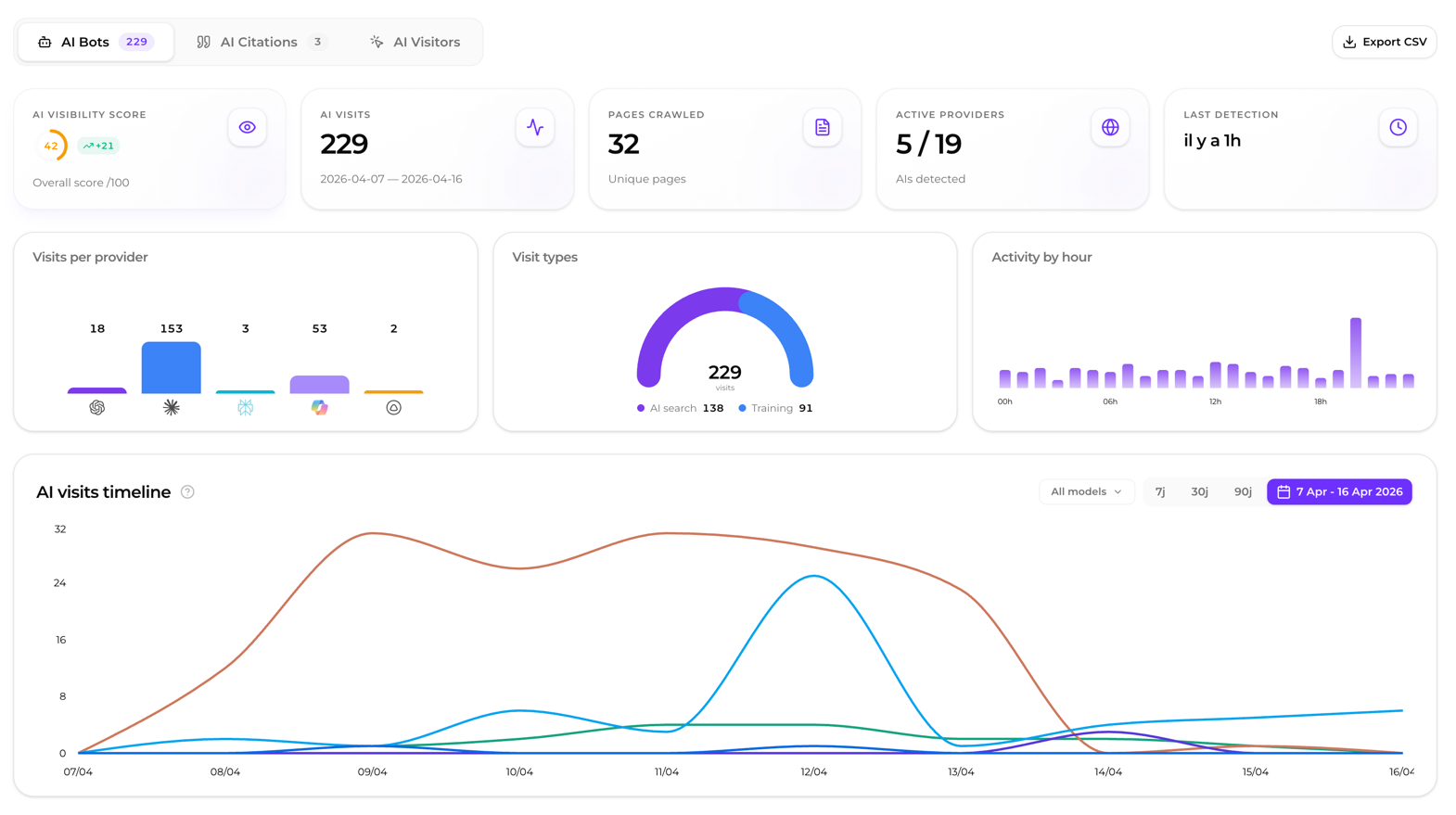
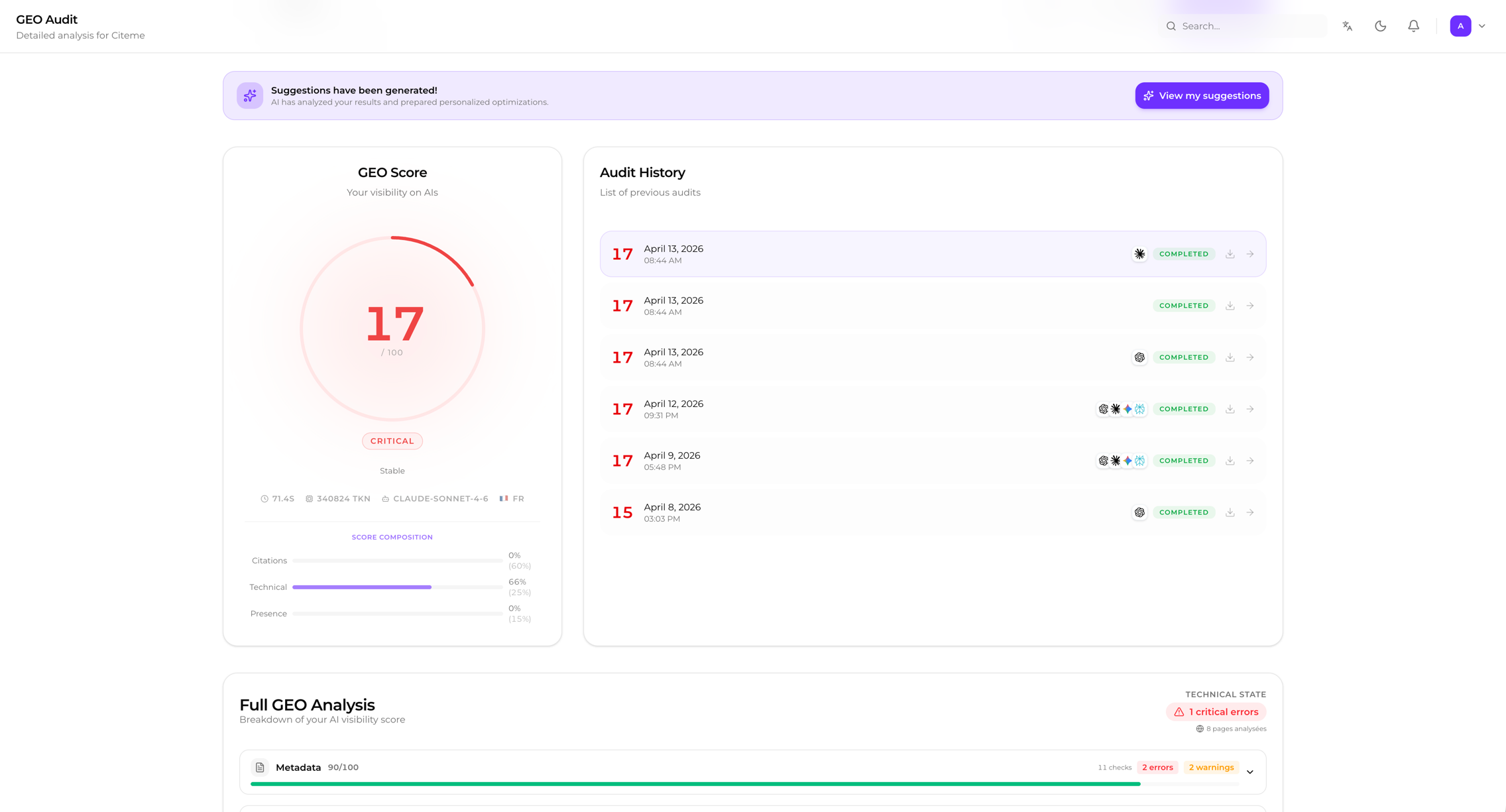
Citeme is a dedicated generative engine optimization platform built specifically to audit, optimize, and monitor brand visibility across AI search engines. The platform queries ChatGPT, Claude, Gemini, Perplexity, Grok, and DeepSeek simultaneously with prompts relevant to your brand and category, then produces a proprietary GEO Score based on citation frequency, citation confidence, and provider diversity.
What makes Citeme a strong choice as a geo tool is its combination of audit depth and actionable recommendations. After analyzing your site, the platform generates specific optimization suggestions: content changes, structured data additions, and targeted content creation to close visibility gaps. It also includes competitor benchmarking, so you can see where rival brands are getting cited and where you have an opening.
Citeme integrates natively with WordPress and 17 other CMS platforms through a CLI and plugins, which makes it practical for content teams that need to act on recommendations without switching contexts. The free audit requires no signup and delivers results in under 10 seconds, making it a strong entry point for brands new to GEO.
Best for: Brands and SaaS companies that want a comprehensive geo platform combining audit, content optimization guidance, and ongoing ai visibility tracking in a single tool.
Profound
Profound is an enterprise-grade GEO platform that provides deep analytics across the full AI search ecosystem. Its Conversation Explorer feature analyzes a dataset of more than 400 million conversational prompts to identify the questions users are actually asking AI systems about your category, and where your brand appears or fails to appear in those responses.
For brands with complex product lines or highly competitive categories, Profound's cross-model prompt testing allows teams to run the same query across multiple generative engines and compare how each one cites, positions, and describes their brand. Its AI crawler analytics add a technical layer: teams can see how AI bots actually access and interpret their content, not just what appears in the final generated response.
Profound also tracks Google AI Overviews specifically, which is important for brands that still rely heavily on traditional search engine volume. The platform includes a dedicated strategist or AI copilot at higher tiers, which suits enterprise teams that want guidance rather than self-serve dashboards.
Best for: Enterprise marketing and SEO teams that need comprehensive cross-engine tracking and deep prompt analytics.
Semrush AI visibility toolkit
Semrush has extended its platform with a dedicated AI visibility layer for existing users. The Brand Radar feature tracks brand mentions across ChatGPT, Google AI Overviews, Gemini, and Perplexity. AI Keyword Suggestions and AI Content Helper assist with content optimization tools that align with how generative engines interpret queries.
The main advantage here is consolidation. Teams already using Semrush for traditional SEO and backlink analysis can add AI visibility tracking without onboarding a separate geo platform. The integration with Semrush's existing keyword and content data means you can manage both seo and GEO workflows inside a single dashboard.
The limitation is depth: for teams that need granular citation source analysis or prompt-level GEO tracking, Semrush's AI features are a supplement rather than a replacement for a dedicated geo tool.
Best for: Existing Semrush users who want to add AI search visibility monitoring without switching platforms.
ZipTie
ZipTie is a GEO monitoring and reporting platform with a standout feature: screenshot capture of AI responses that serves as evidence of brand visibility. For agencies and teams that need to demonstrate GEO results to clients or stakeholders, this is practically unique in the market.
The platform covers monitoring across generative AI platforms, generates AI query suggestions to automate prompt creation, and provides citation breakdowns by source. It does not include content generation or optimization briefs, so teams using ZipTie still need a separate tool to act on what they find.
Best for: SEO agencies that need client-ready evidence of AI visibility alongside monitoring data.
Goodie AI
Goodie AI is an AI-native geo platform founded by practitioners from major technology companies. It focuses on monitoring brand mentions across generative engines with an emphasis on share of voice within competitive categories.
According to Superlines' 2026 GEO tools comparison, Goodie AI is best for brands that need reliable cross-engine monitoring with clean, actionable data rather than a full-stack optimization workflow. The platform tracks how different AI models interpret and cite a brand over time, which is particularly valuable for monitoring shifts after content updates.
Best for: Brands that want focused AI search monitoring with strong competitor benchmarking.
HubSpot AI search grader
HubSpot's AI search grader offers a free entry point into GEO analytics. The tool shows how your brand appears in AI-generated search results across major platforms and provides LLM-referred visitor segmentation to attribute AI-driven traffic in your analytics. HubSpot's AI search grader offers a clear brand visibility snapshot without requiring a full platform subscription.
Following HubSpot's acquisition of XFunnel in early 2025, the platform added AI search simulation features and transparency tools that give teams a better view of the prompts that surface their brand.
Best for: Teams new to GEO that want a free starting point before committing to a paid geo platform.
ToolBest forKey strengthStarting priceCitemeBrands and SaaS teamsAudit + content optimization + monitoring in one platformFree audit, paid plans availableProfoundEnterprise teams400M+ prompt dataset, deep crawler analyticsCustom enterprise pricingSemrush AI VisibilityExisting Semrush usersConsolidated SEO and GEO workflowsIncluded with Semrush subscriptionZipTieSEO agenciesScreenshot evidence capture for client reportingPaid plans from ~$99/monthGoodie AIBrand monitoringCross-engine share of voice trackingPaid plansHubSpot AI Search GraderGEO beginnersFree brand visibility snapshotFree
What to look for in a generative engine optimization tool
Not every GEO platform is built the same way, and the differences matter significantly depending on your team's goals. Here are the key criteria to evaluate when selecting the right generative engine optimization tool.
AI engine coverage
The most important variable is which generative engines the tool actually monitors. At a minimum, a credible geo tool should cover ChatGPT, Google AI Overviews, Gemini, and Perplexity. Tools that also track Claude, Grok, and DeepSeek give a more complete picture of your ai search visibility, since different demographics and use cases concentrate on different AI platforms.
A 2025 analysis cited by the Awesome GEO GitHub repository found that Wikipedia dominates ChatGPT citations at nearly 48% of top results, while Reddit appears far more heavily in Gemini and Perplexity responses. That kind of variance across AI search engines means multi-engine tracking is essential for accurate visibility data.
Real UI versus API-only data
One critical technical distinction between GEO platforms is whether they capture AI responses from the live user interface or rely solely on API calls. According to research cited by Superlines, API-based AI visibility data frequently differs from what real users see in actual generated responses. Platforms that simulate real user queries from the live UI provide significantly more accurate data for content optimization decisions.
Content optimization guidance
Monitoring alone tells you where you are invisible; it does not tell you how to fix it. The best geo tools include content optimization tools that go beyond keyword recommendations. Look for platforms that analyze your content structure, identify gaps in entity coverage, and suggest specific changes to improve how AI crawlers parse and trust your pages.
Understanding how AI citations work is fundamental here. The platforms that model their recommendations on how generative engines actually select sources are far more useful than those that apply traditional SEO logic to a fundamentally different problem.
Competitor benchmarking
AI search visibility is relative. Knowing your brand appears in 30% of relevant prompts means little without knowing whether your main competitor appears in 60%. Strong GEO tools include competitor tracking that shows your share of voice within your specific category and highlights the sources and content formats that drive your competitors' citations.
Technical accessibility analysis
Some geo platforms now include AI crawler analytics that show how AI bots access and interpret your site. This technical layer identifies issues like JavaScript rendering problems, missing structured data, or unverified brand claims that prevent generative engines from accessing your content in the first place. For brands with complex technical setups, this feature can unlock visibility that pure content optimization cannot fix alone.
Key takeaway: When evaluating a geo tool, prioritize platforms that cover multiple AI search engines, capture data from live interfaces rather than APIs only, and provide actionable content optimization guidance alongside monitoring. A geo tool that only tells you where you are failing without suggesting how to improve is only half the solution.
How to build a GEO strategy around your geo tool
Choosing the right generative engine optimization software is only the first step. Getting results requires a systematic approach to how you use the data.
Start with a baseline audit. Before optimizing anything, run a full brand audit across the AI engines your geo tool covers. Document your current citation rate, which prompts trigger mentions, and how your brand is described when it does appear. This baseline is what you will measure all future improvements against.
Identify your highest-value prompts. Not all prompts are equal. Focus your GEO efforts on the queries that represent actual buyer intent in your category: comparison queries, "best for" queries, and category definition queries. These are where AI-generated answers most directly influence purchase decisions.
Align your content with AI citation patterns. AI models favor content that includes specific data points, clear definitional sentences, authoritative citations, and structured formats like numbered lists and comparison tables. Reviewing the Google AI Overviews optimization guide gives a concrete breakdown of what Google's AI systems specifically look for when selecting content to surface.
Build your source stack. Visibility in AI answers depends heavily on your presence in the third-party sources AI models treat as ground truth: Wikipedia, Reddit threads that rank on Google, industry publications, and review platforms. Your content optimization strategy needs to extend beyond your own site to these external sources.
Track and iterate. GEO performance changes as models update, as competitors optimize, and as new AI search platforms gain traction. Set a regular cadence for reviewing your geo tracking data, typically weekly or bi-weekly, and adjust your content strategy based on what is driving citation improvements.
For a detailed framework on improving your GEO Score specifically, the guide to achieving a better GEO score walks through the scoring mechanics and the highest-impact levers for improvement.
GEO tools versus traditional SEO tools
A common question from teams new to generative engine optimization is whether they need a dedicated geo tool or whether their existing seo tools are sufficient.
The honest answer is that traditional SEO tools were not built for this problem. Semrush, Ahrefs, and Moz are exceptional at tracking keyword rankings, backlink profiles, and on-page optimization for traditional search engines. They have added some AI search monitoring features, but these are supplements rather than core products.
Dedicated GEO tools approach the problem from a fundamentally different angle. They model how AI systems retrieve and evaluate content, track brand mentions across generated responses rather than ranked pages, and provide optimization guidance based on how generative engines select sources rather than how traditional search engine algorithms rank pages.
For most brands, the practical answer is both: use traditional seo tools for the search engine optimization work that still drives significant traffic, and add a dedicated geo platform to manage your growing AI search visibility. The brands that treat AI search as an entirely separate channel rather than a subset of traditional SEO will be positioned better as generative engines continue taking share from traditional search.
Conclusion
Generative engine optimization has moved from a niche experiment to a core discipline for brands that want to stay visible as AI search engines continue reshaping how people discover information, compare options, and make decisions. The right geo tool gives you the visibility data and optimization guidance to compete effectively in this new environment.
The best generative engine optimization tool is ultimately the one that matches your current stage: a free audit tool if you are just starting out, a comprehensive platform like Citeme if you need audit, optimization, and monitoring in one place, or an enterprise solution like Profound if you need deep prompt analytics and cross-engine coverage at scale.
Start by running a baseline audit of your current AI search visibility. The gap between where you are and where your competitors are cited is the clearest argument for building a GEO program now rather than later.
If you want the long form on a specific vendor rather than a shortlist, our reviews of PromptWatch and Qwairy take each one apart on pricing, engine coverage and what the public documentation actually proves.
Useful resources
Keep digging
- GEOGenerative engine optimization: how to optimize your content for AIA practical guide to Generative Engine Optimization: how to structure content, earn citations, and get your brand into AI answers on ChatGPT, Perplexity and Gemini.Read
- GEOAnswer engine optimization (AEO): how to get your content cited by AIAnswer Engine Optimization (AEO) is how you get cited by ChatGPT, Perplexity, Gemini, and AI Overviews. A complete guide: AEO vs SEO vs GEO, pillars, and how to measure it.Read
- GEOCiteme vs Profound AI: which tool is worth it in 2026?Citeme at $49/month or Profound at $332.50+? We compare both AI brand monitoring tools on pricing, engine coverage and optimization. Clear verdict inside.Read
- GEOCiteme vs Peec AI: which AI visibility tool wins? (2026)Citeme ($49/mo) vs Peec AI (€89/mo): which AI visibility tool is worth it? We compare features, pricing and optimization guidance, with a clear winner.Read