Citeme V2: one workspace to track, fix and prove your AI visibility
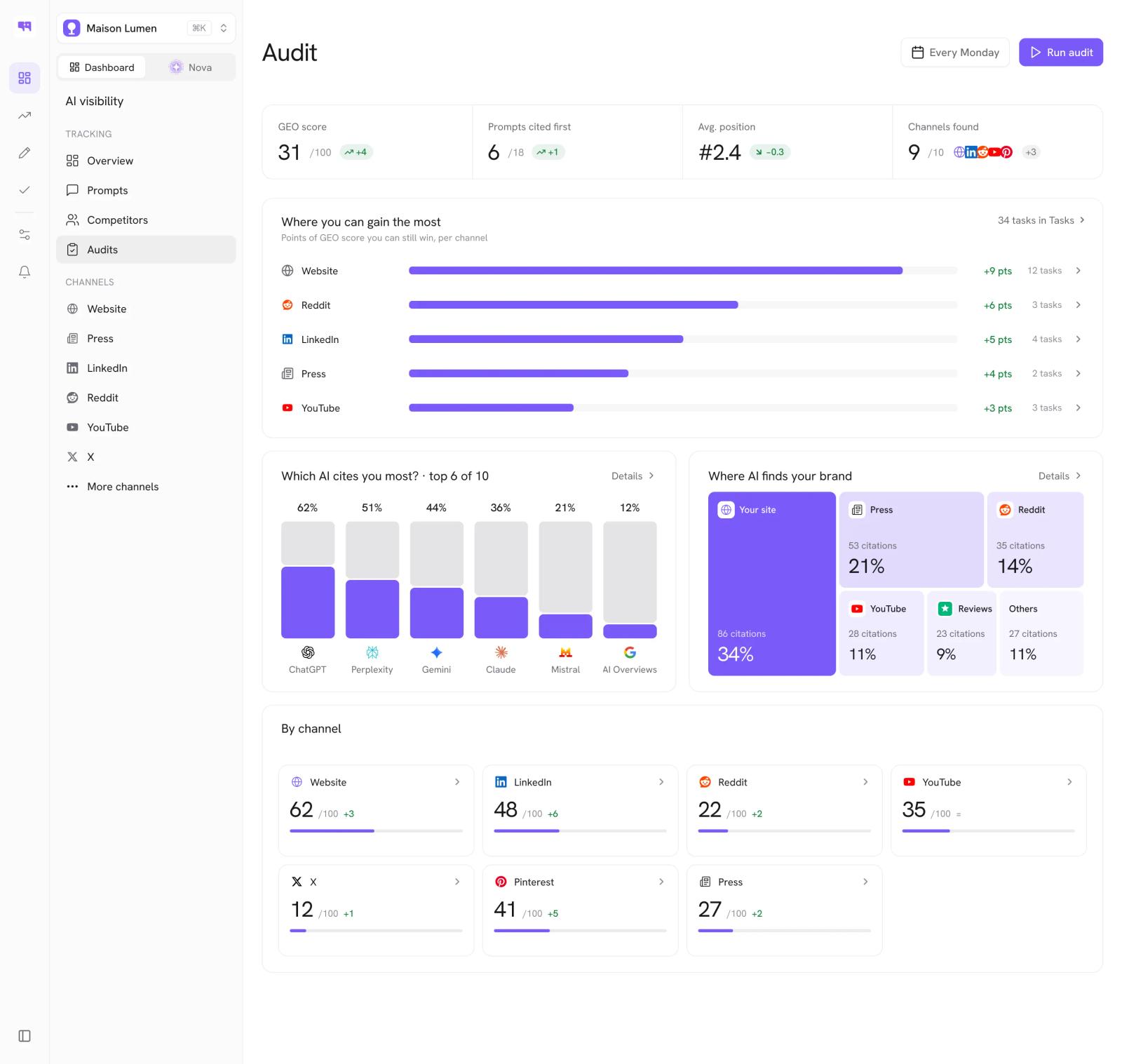
Citeme was built to answer one question: do AI engines cite your brand? V2 goes further. It shows who they recommend instead of you, what that costs you in traffic and revenue, and what to fix to win the spot back, in a workspace rebuilt from scratch.
A new workspace
The home screen now fits on one page. Four metrics up top: your visibility in AI answers, your share of voice against competitors, the visitors sent by AI engines and the revenue they bring. Below, a visibility chart annotated with your own actions, so you see what moved the line, not just that it moved.
Daily prompt tracking on ten engines
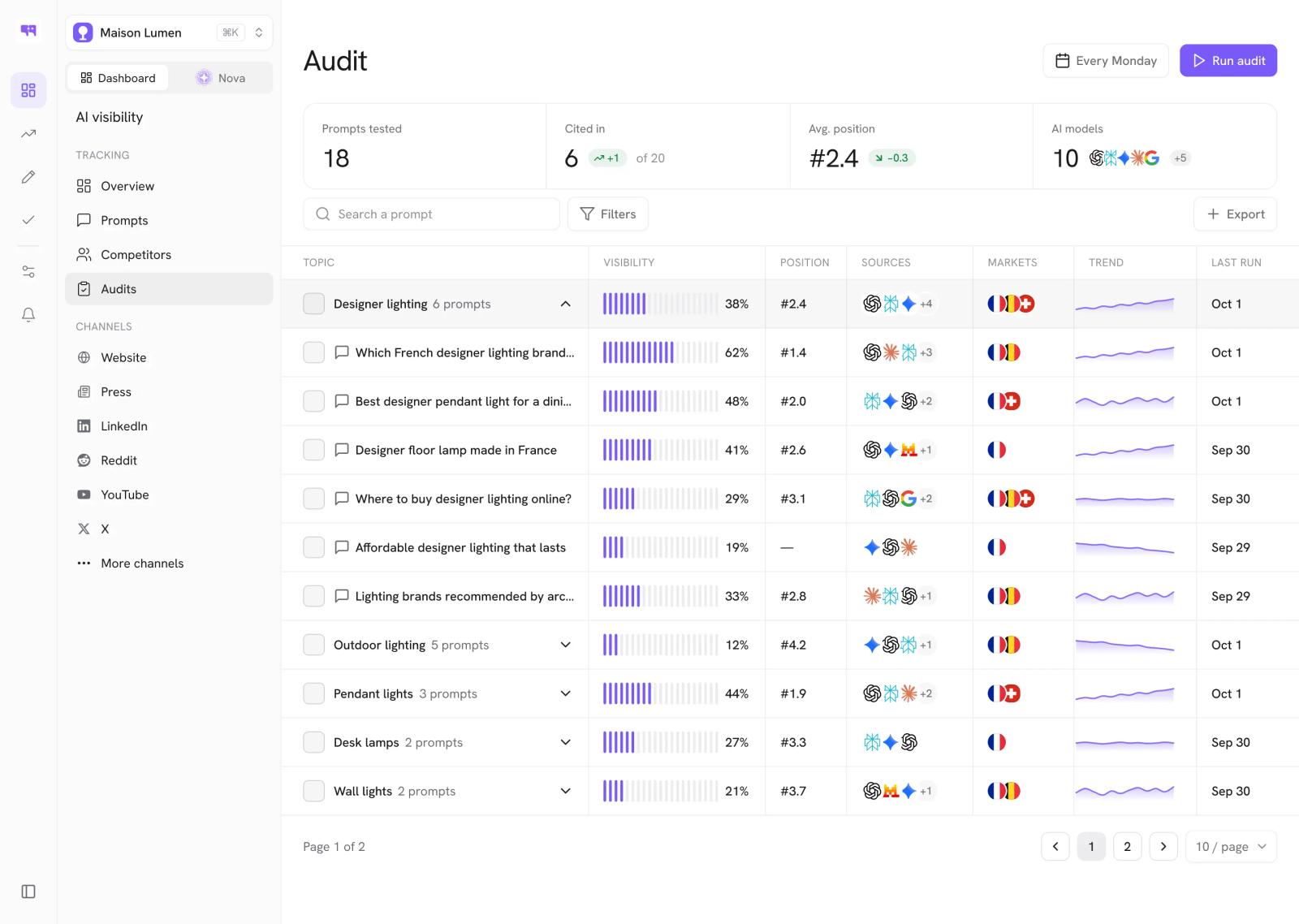
Citeme writes the questions your buyers ask AI from your own site, then asks them every day on the engines you track: ChatGPT, Claude, Gemini, Perplexity, Grok, Google AI Overviews, Siri, DeepSeek, Meta AI and Mistral. For each prompt you read every engine’s full answer, where you appear, your rank and the tone used.
Who AI recommends instead of you
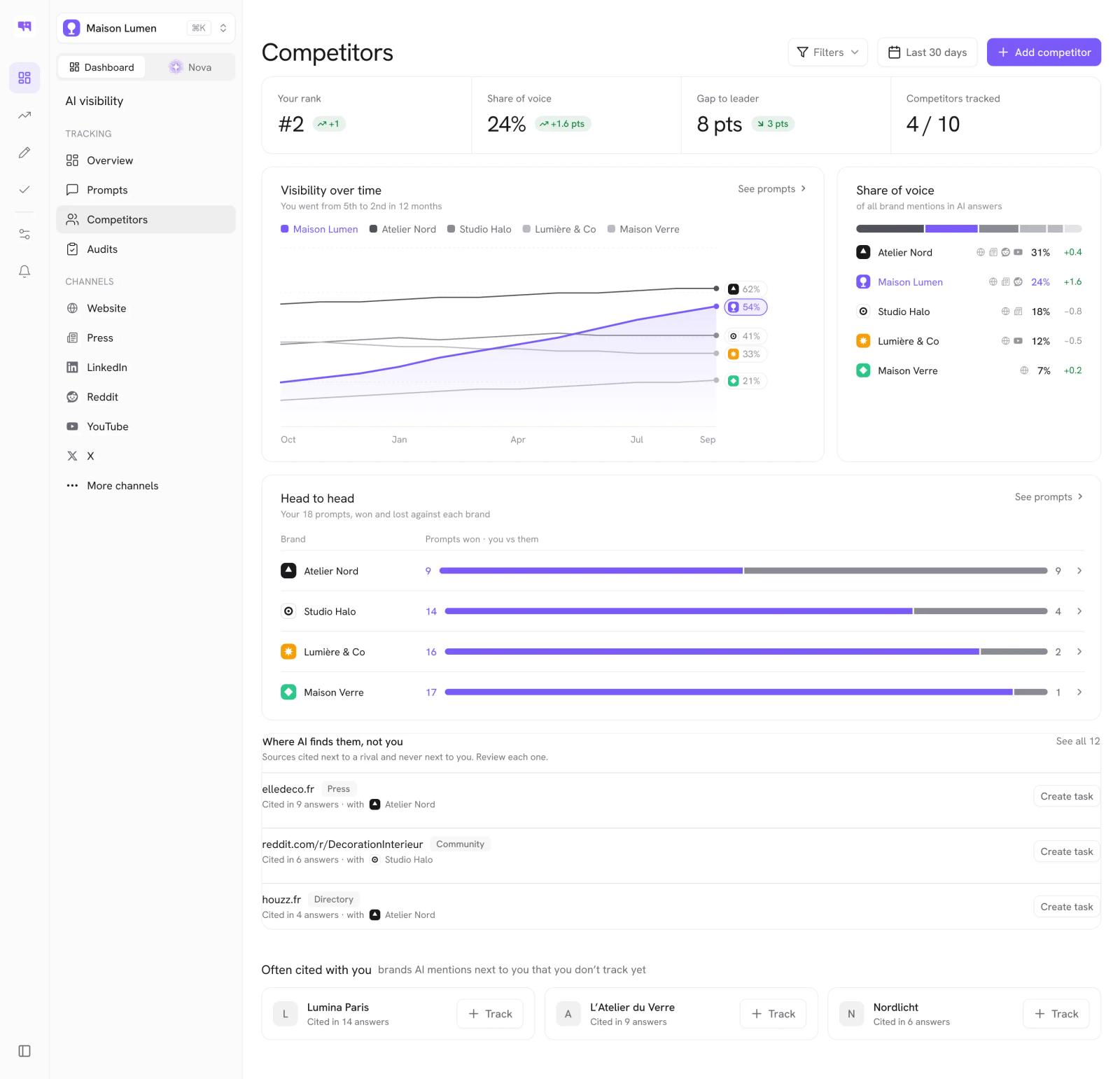
The Competitors page ranks the brands AI engines cite on your prompts, with each one’s share of voice. Compare your brand to a competitor prompt by prompt, and see the sources that cite them and not you: a comparison, a directory or a press article that is missing your name.
An audit that goes beyond your website
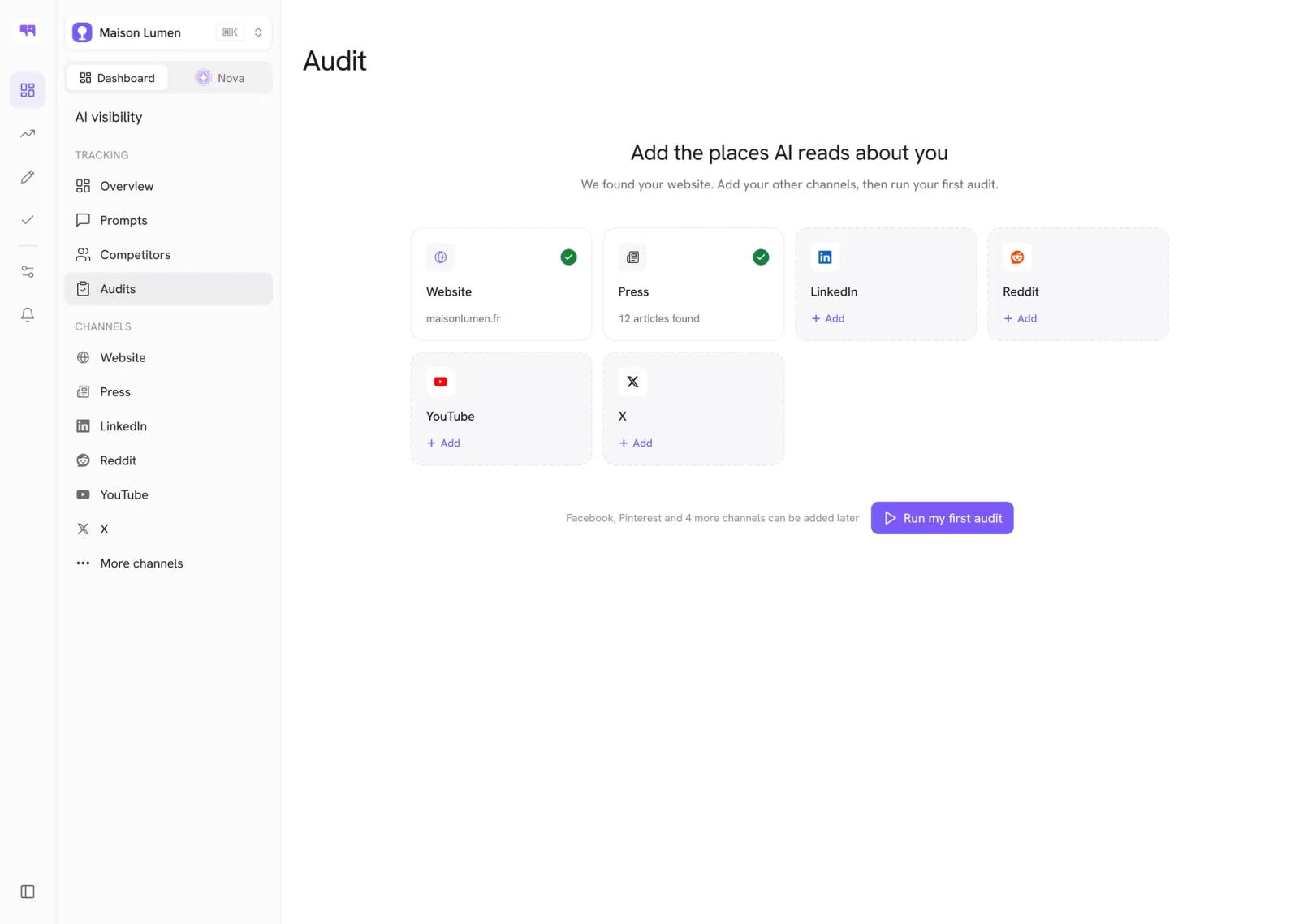
AI engines don’t only read your site. They read what is said about you on LinkedIn, YouTube, Reddit, in the press and in reviews. The audit now covers these channels: where AI finds information about your brand, which of it is wrong or outdated, and which channels earn you the most citations.
- GEO Score: a 0 to 100 score that sums up your visibility, authority and the sentiment of answers.
- Audit history: every audit is kept, so you can follow the score over time and compare two audits.
- Authority: the articles that mention you, and whether engines all tell the same story about you.
From AI traffic to revenue
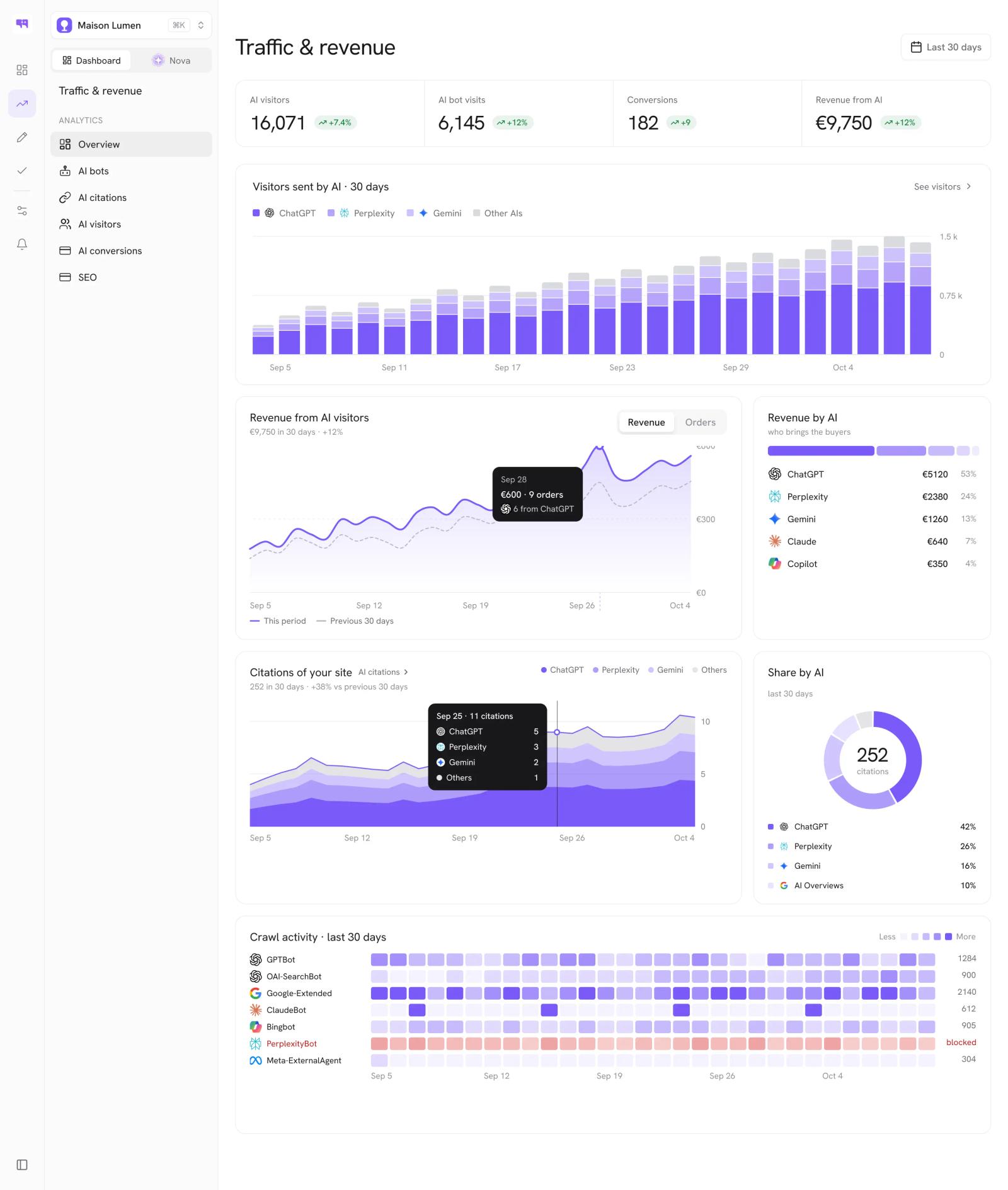
Google Analytics doesn’t see AI crawlers. With one script on your site, V2 shows which bots visit (GPTBot, ClaudeBot, PerplexityBot…), how often, on which pages, and which ones you block without knowing it. It also tracks the real visitors sent by AI engines and, with AI Impact, ties each visit to its conversion, up to the revenue confirmed by your CRM or store.
Fixes, not just findings
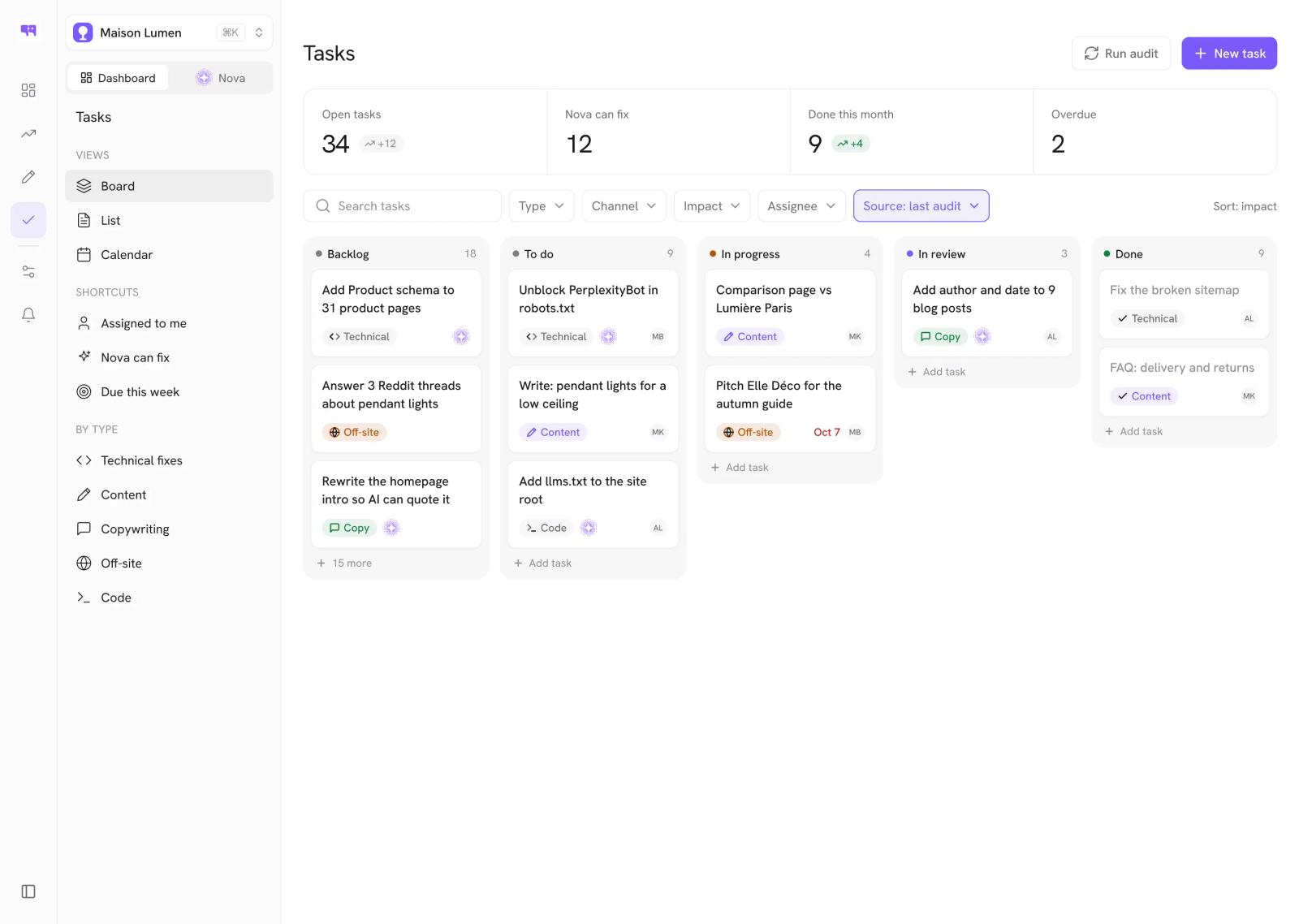
Every gap becomes a task, sorted by estimated impact: a bot blocked in your robots.txt, missing structured data on product pages, a guide your competitors have and you don’t. Technical tasks come with the exact change to apply.
- Workflows: a trigger, such as a visibility drop on a prompt, starts AI agents that find the cause and draft the fix.
- Your approval first: nothing is published until you approve it.
- CMS publishing: approved content goes straight to WordPress, Webflow or Shopify.
Nova and the MCP server
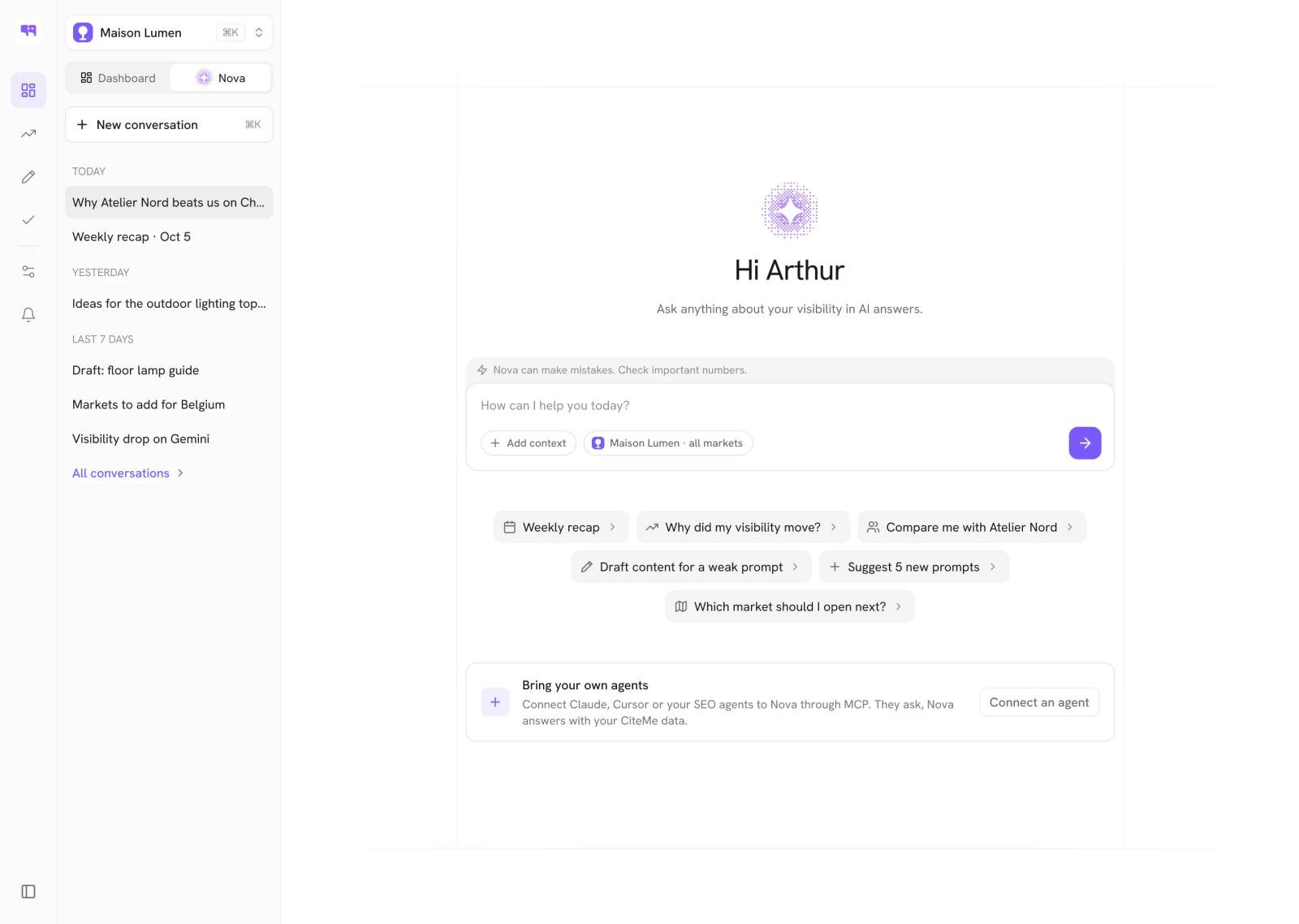
Nova is Citeme’s assistant. Ask it questions like you would a colleague, “why does this competitor beat us on ChatGPT?”, and it reads your data, explains what it sees and suggests an action plan. The Citeme MCP server brings your audits, citations, prompts and AI visits to Claude, ChatGPT, Cursor or n8n, with fourteen tools and a single endpoint.
AI shopping for e-commerce
AI engines recommend products too. For stores, V2 imports your catalog, asks engines buying questions and tracks your products one by one: which are cited, which aren’t, and whether the price and availability AI repeats are right.
Improvements
- New pricing: three self-serve plans, Starter ($69/month, 50 prompts), Growth ($149, 125 prompts) and Pro ($349, 300 prompts), all with unlimited users and daily tracking
- Every plan starts with a free 3-day trial
- Unlimited markets (countries and languages) from Growth, and each extra engine for $25/month
- Navigation grouped by use: AI visibility, traffic and revenue, tasks and settings
- A keyboard shortcut (⌘K) opens any project, page or action
- Prompts grouped by topic, to spot at a glance the themes where you are missing