Be the brand AI recommends.
Purchase-intent queries now end in an AI answer. We make your products the recommendation, not your competitor's: catalog imported, buying queries audited, every product scored, and AI orders counted with their amounts.
- Get cited on buying queries
- Authority signals AIs trust
- Visibility that converts ~4.4× better than classic SEO (Semrush, 2025)

“Gemini now cites us on the queries that matter.”




Four coordinated levers, tracked on a shared board
Get cited on
You know AI answers matter. Most agencies still report Google positions.
Your buyers ask an AI first
Your prospects no longer read ten links. They read one answer, and the two or three sources it cites. Across the brands we monitor, nearly nine answers out of ten name someone else.
A dashboard doesn’t ship anything
A visibility score tells you where you stand. It does not write the page, fix the schema or earn the mention. If your last three SEO recommendations are still unshipped, a measurement tool alone will not change that.
There is no position in an AI answer
A classic agency reports Google positions in a monthly PDF. In an AI answer, either your brand is among the sources named, or it is absent.
Agency execution. Product-grade transparency.
A dedicated team
A strategist, writers and a technical expert who know your market. The same people every week: an extension of your team, not a vendor you have to chase.
Our own platform behind every action
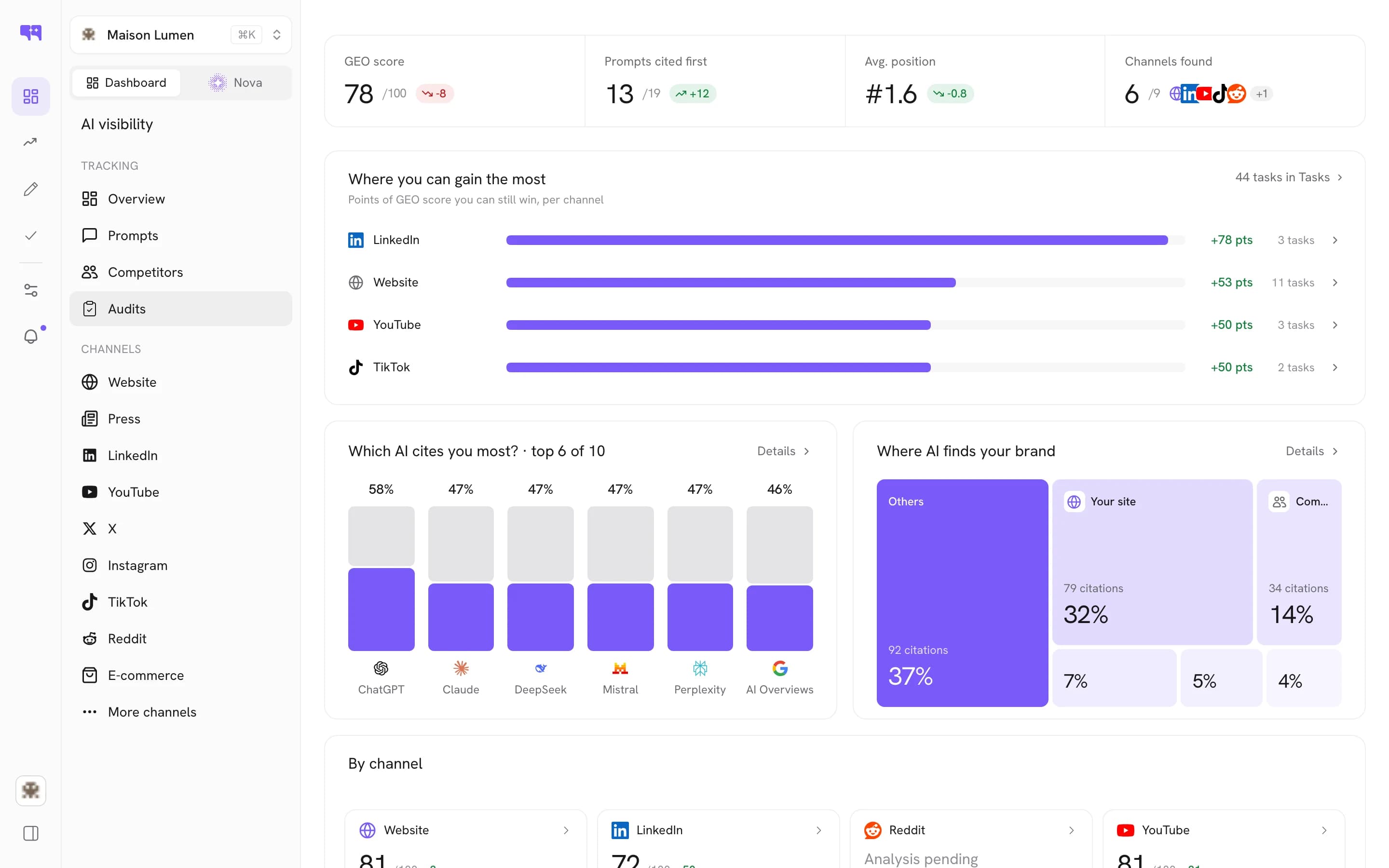
Every action is scored, monitored and visible in real time on the Citeme platform: 10 AI engines, GEO Score, competitive monitoring and citation tracking, included in every plan.
Measured, and published
Each query runs several times per engine, and we publish our research on what AI actually crawls and cites. Our own numbers included, down to our 2% on Anthropic.

“We knew AI answers were sending buyers to our competitors, and nobody in-house had time to own it. Citeme became that team: audit, content, technical fixes, reporting. We just approve on the board.”
Everything it takes to become the answer.
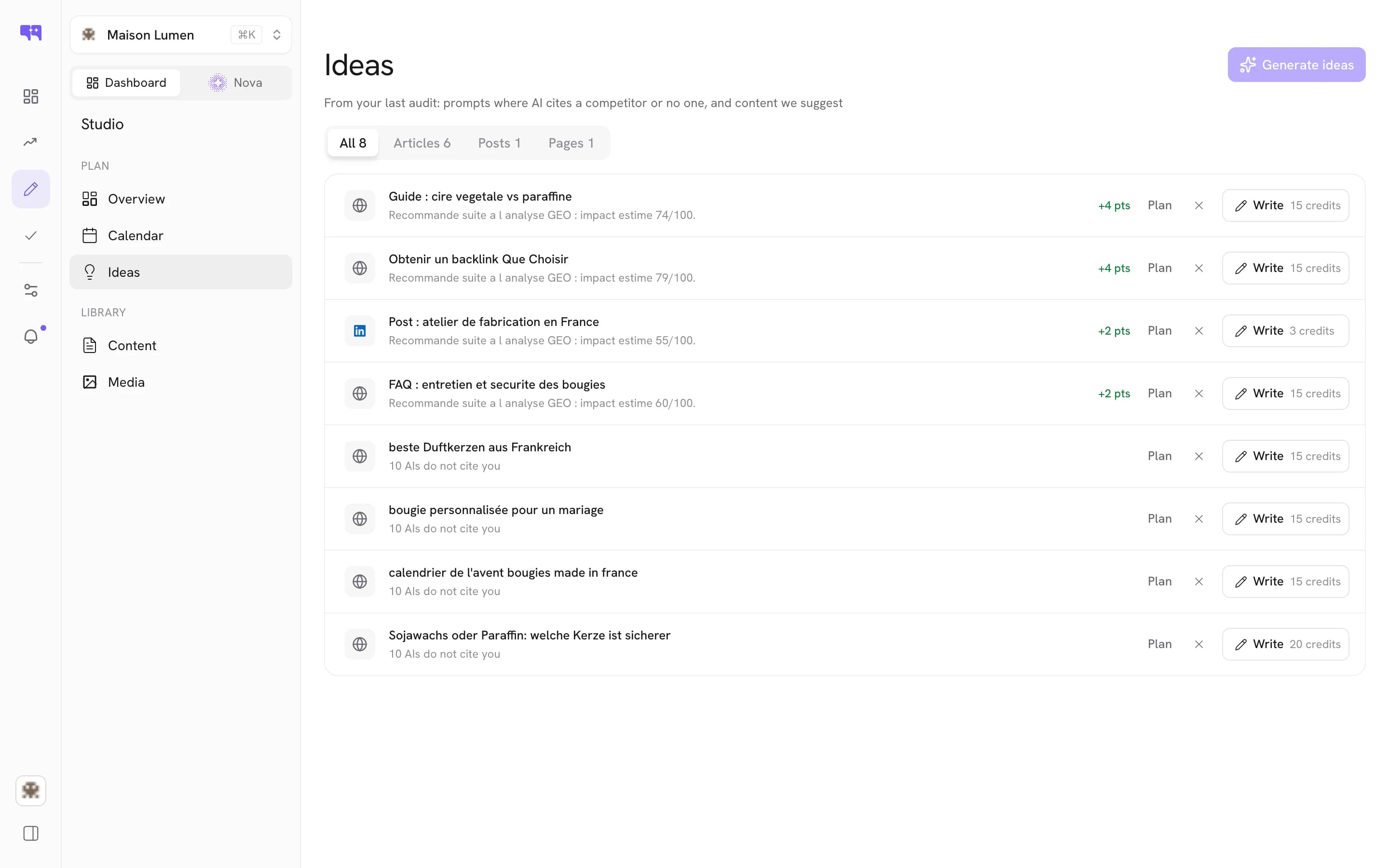
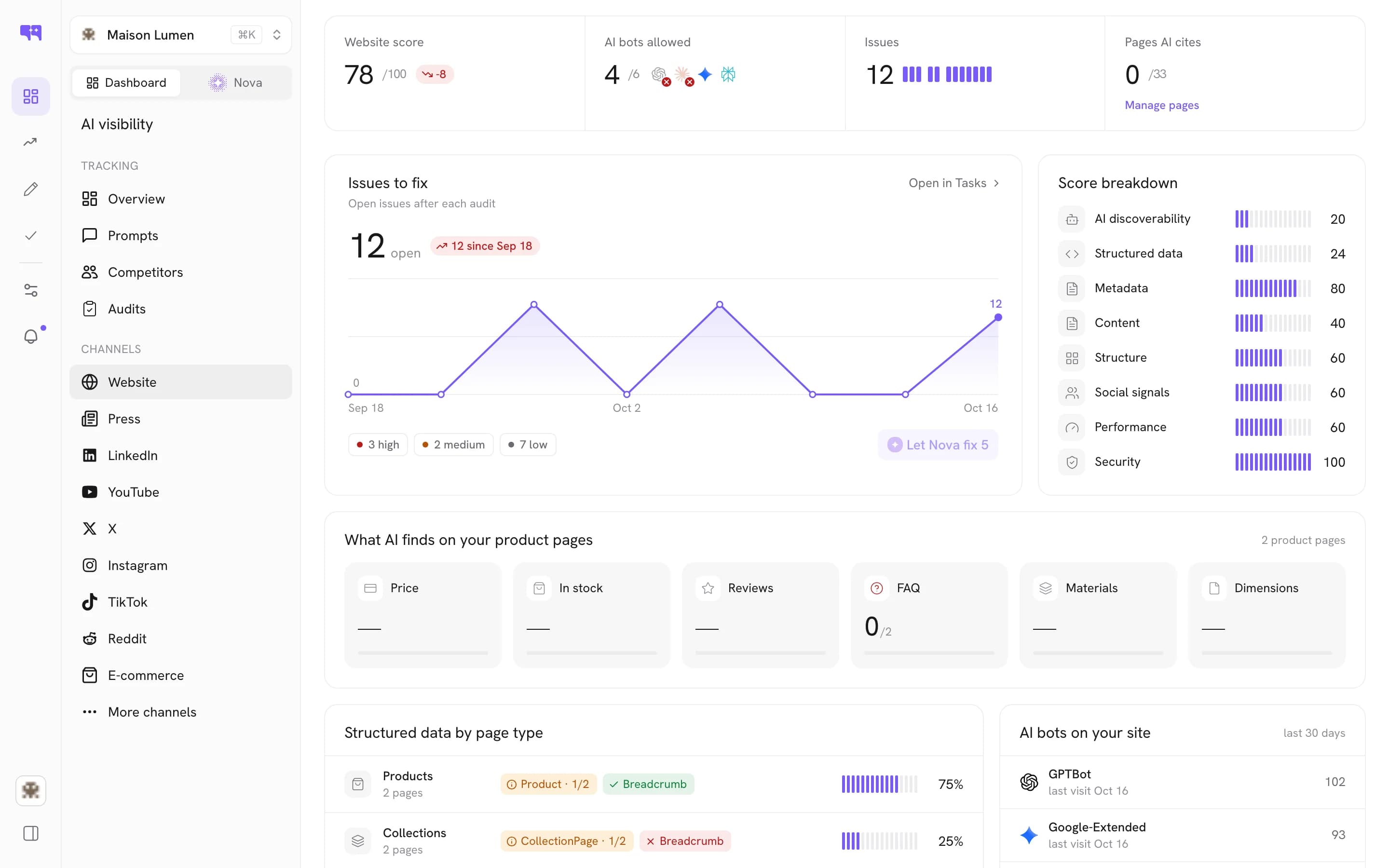
One team runs five coordinated workstreams, and you approve every action on a shared board.

The shopping answer is the new shelf.
When a buyer asks an assistant where to buy a refurbished iPhone, they get a shortlist, not a results page. Being absent from that shortlist costs the sale before any comparison happens.

GEO for your catalog, product by product.
No feed export needed
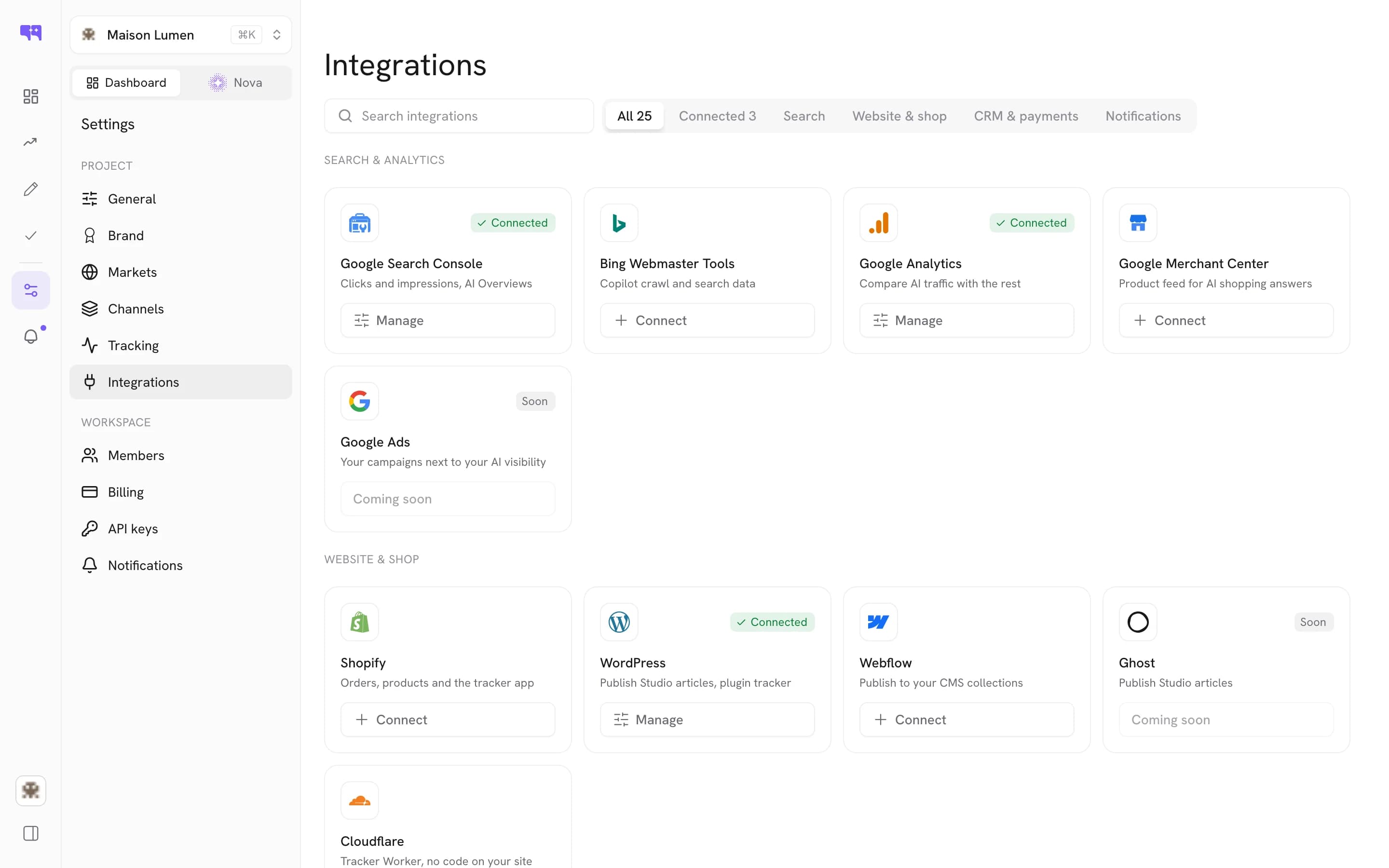
Citeme detects Shopify, WooCommerce, PrestaShop or Magento and imports your products, with a generic scraper for other platforms. A CSV, TSV or Merchant Center export can sync alongside.
Buying queries, suggested
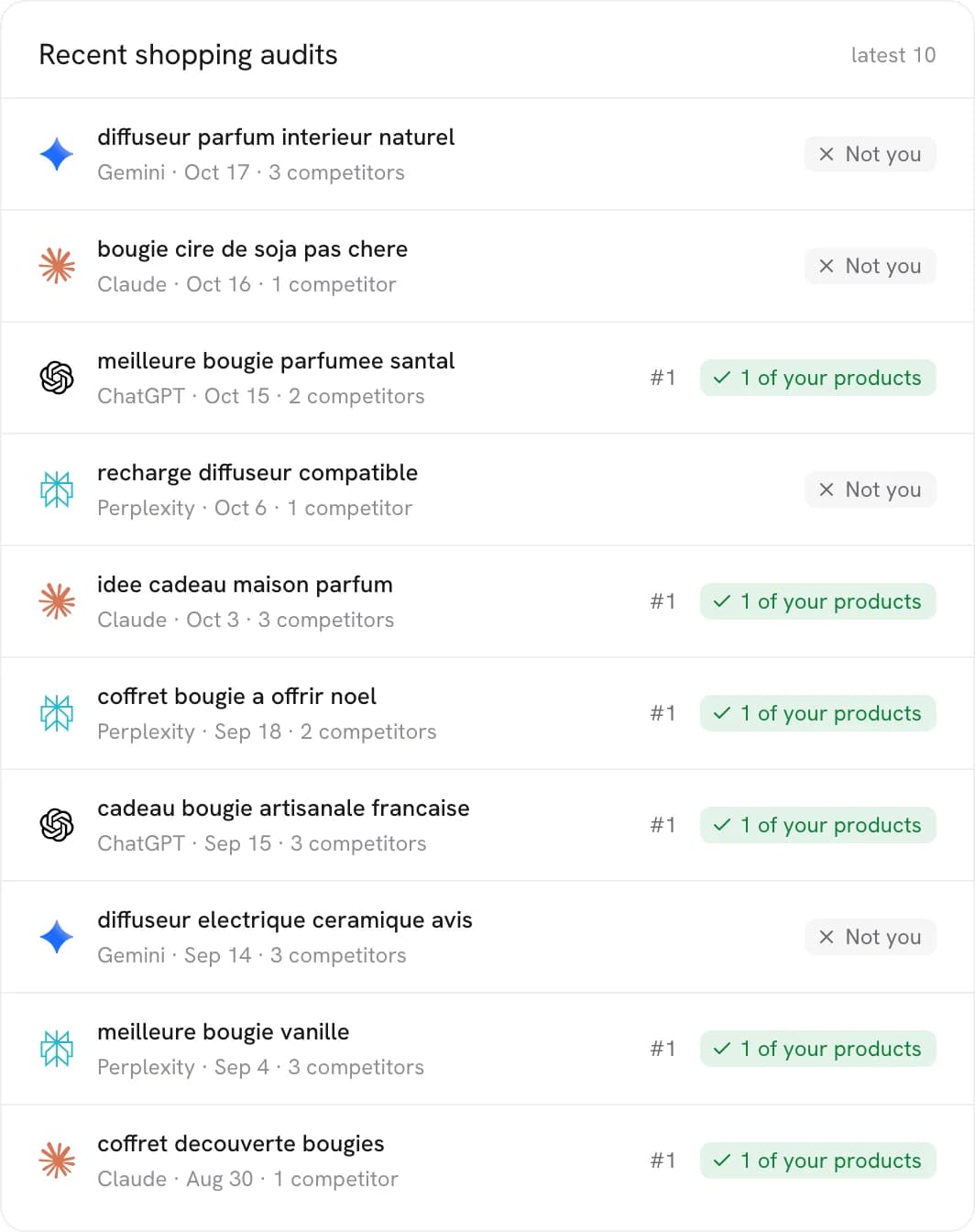
Citeme reads the catalog and proposes the buying queries your products should answer. The list you validate is the list the engines are questioned on, followed over time.
Position-weighted shopping audit
A primary recommendation counts 100, a top-three place 75, a contextual mention 40, an incidental one 15. A place in a shortlist of five is worth a fraction of being the recommendation.
A GEO score per product
Each product is scored out of 100 on description, identifiers, offer, title, image and category. It counts as ready at 70, and its weakest dimension tells you what to fix first.
Authority signals AIs trust
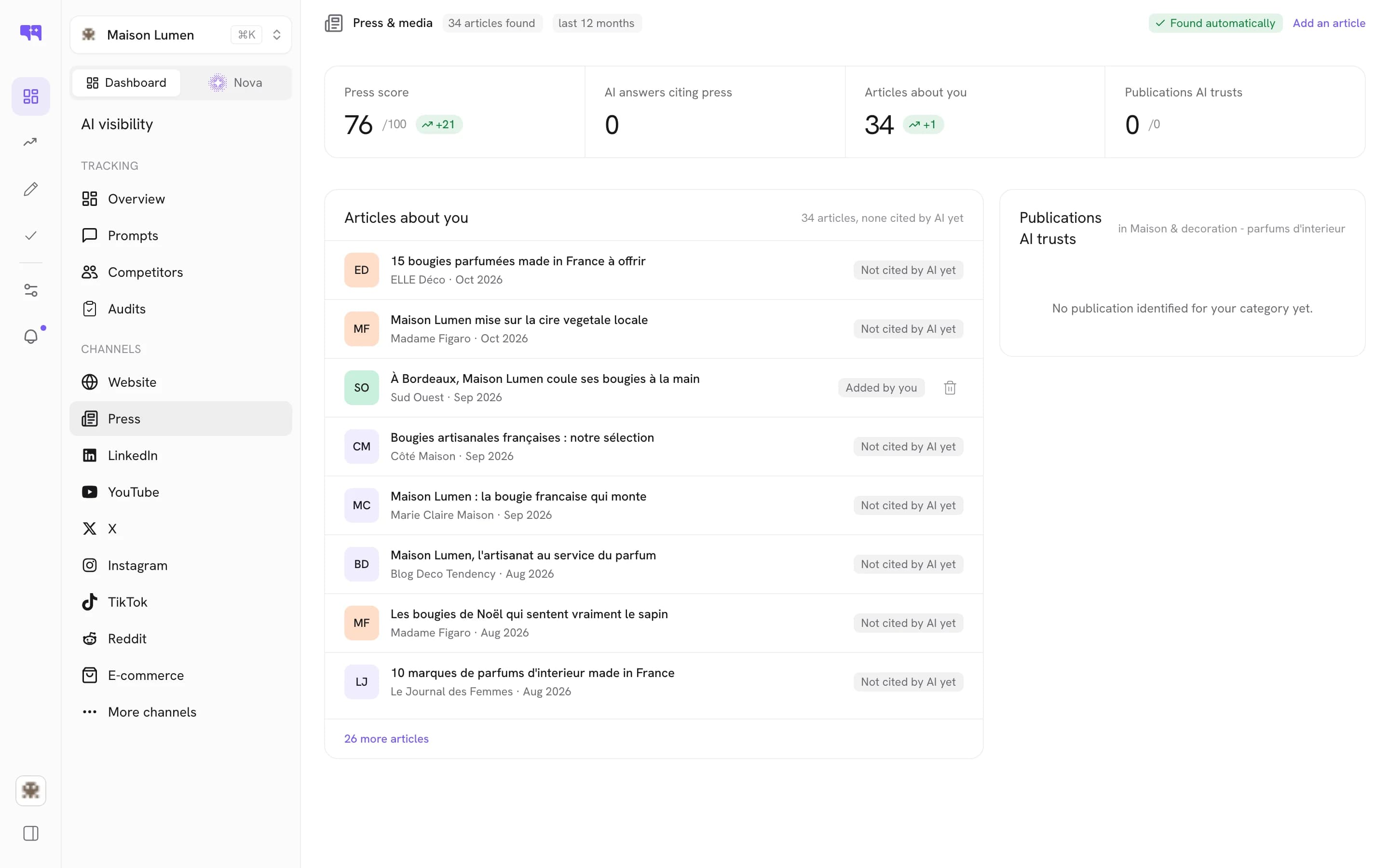
The authority audit reads what others say about you: the best average rating on platforms such as Google, Trustpilot and G2, press mentions and forums, the independent confirmation assistants look for.
AI orders, with amounts
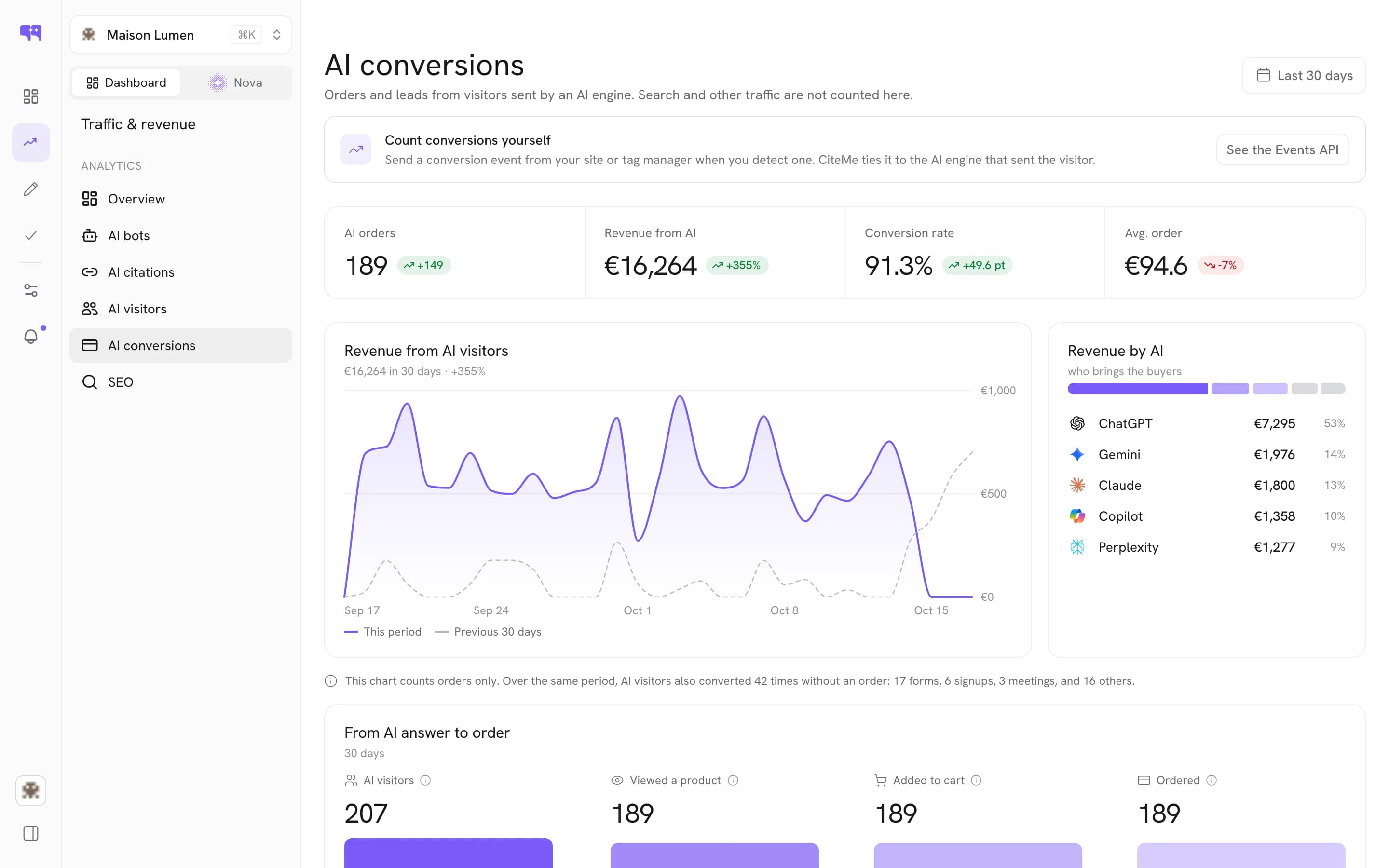
Purchases are recorded with their value and attributed over a 30-day window, with AI orders behind the Impact tab. A count of AI visitors becomes a figure finance can read.
Everything in a done-for-you engagement, priced after a 30-minute call.
One team that measures and executes.
Measures and executes
Citeme, done for you
- A strategist, writers and a technical expert shipping every week
- Citations tracked live on 10 AI engines
- You approve every action on a shared board
- Platform and initial audit included
Measures, you execute
The platform alone
- $69 excl. VAT a month, 7-day trial for $1
- Tells you what to change
- Your team writes and ships the fixes
- Right when the bottleneck is knowledge, not capacity
Reports positions
A classic SEO agency
- Optimizes for Google rankings
- Reports positions in a monthly PDF
- No measure of AI citations or Share of Model
- Doesn’t show who AI names instead of you

A plan with dates, from day one.
Kickoff and a full GEO/SEO audit of your market and competitors.
llms.txt, structured data (schema.org) and a structure LLMs can read.
Your existing pages reworked to become citable sources.
A presence where AIs go looking for their sources and opinions.
The numbers we publish, including our own.
We publish what we measure.
Who read this page?
A website learns which AI assistant sent a visitor from a label on the click, and for five days in October ChatGPT's links carried none. In our lab, every assistant that read the page live could be identified from its own requests, three of them while passing for a browser. On client sites, a usable read came before only about one ChatGPT click in a hundred.
Read the study September 2026What is actually crawling you
385,057 AI-agent requests across twenty sites. Seven per cent of them are not AI agents at all, the biggest crawler has never read your robots.txt, and no efficiency metric ranks the engines the same way twice.
Read the studyYour GEO team, without the hiring.
Strategists, writers and engineers who audit, produce, publish and track your citations. The same faces, every month.



Good to know
And if yours isn’t here, we answer fast. By a human, promise.
Do I need to export a product feed first?
No. Citeme detects your platform live and imports the catalog through the native API when one exists; when it does not, a generic scraper builds the product list from your storefront. Starting from the store means you see a first audit the same day, and the feed becomes an optimization rather than a prerequisite.
Does this work if I am not on Shopify?
Yes. Detection runs live, the native API is used when the platform exposes one, and the generic scraper covers the rest. The audit and the per-product scoring do not depend on your platform. What varies is how the fix ships: on Shopify, WordPress and Webflow Nova publishes it after your approval; elsewhere the rewrite goes into your own publishing flow.
What does the Google Merchant loop do?
Once the organization owner connects Merchant Center, Citeme syncs the processed products, imports impressions, clicks, conversions and click-through rate, and turns its findings into proposals you approve or reject. Nothing is written to Google unless the owner enables publishing. The integration is still awaiting Google's validation: until then, Google blocks the connection for accounts outside its test list.
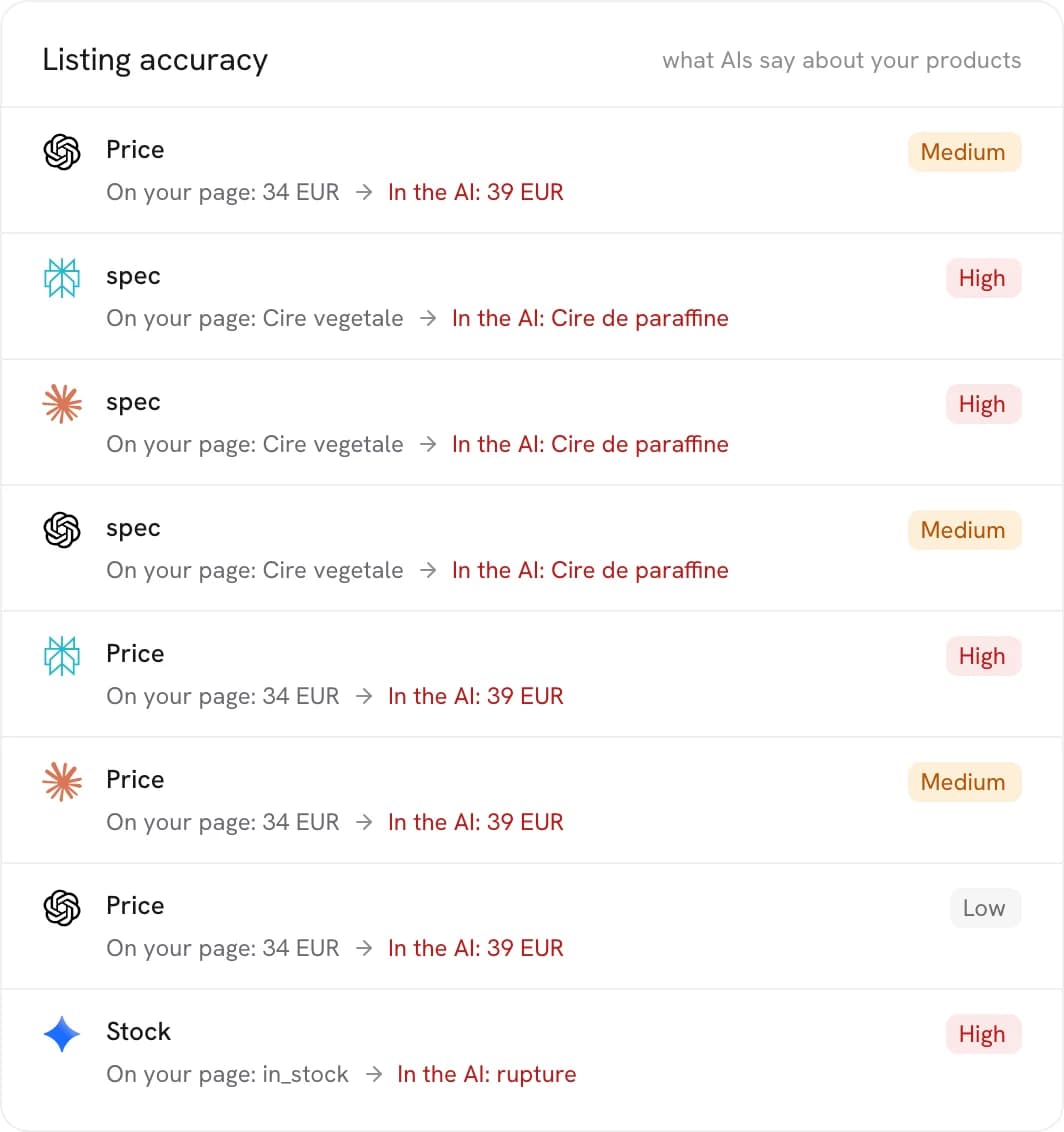
Why do the engines sometimes state the wrong price for my products?
Because they answer from what they retrieved: a cached page, an aggregator or a marketplace listing rather than your store. An outdated price or a product shown as unavailable does more damage than being ignored, since the buyer acts on it without visiting your site. The audit checks what the engines say about your products, and these contradictions are usually a structured data problem.
How many products can be tracked?
The import is not the constraint, the querying is. Every buying query has to be run against the engines repeatedly to produce a trend, and that has a real cost per run, so volumes sit inside your plan. Start with the products that carry the margin, get the trend on those, and widen once you know what a point of share of voice is worth.
See where you stand
across the 10 AI engines.
A 30-minute call. Every engagement includes the platform and the initial audit, so you see exactly where you stand before committing to anything.

See it on
your own market.
Test your prompts on the ten AI engines: 7 days for $1, then cancel anytime.